
.png)
Autonomous AI is moving faster than the operating models designed to govern it. As enterprises scale agentic workflows, static accountability, manual approvals and policy-led controls can create significant operational risk. This POV explores how organisations can redesign People, Process and Technology to govern AI agents effectively, enable safer human-machine collaboration, and turn agentic AI from experimentation into sustainable business value.

Static ownership fails when autonomous agents shift risk states rapidly. Enterprises must appoint an Ultimate AI Accountability Owner (UAAO) and use a Dynamic RACI that automatically elevates accountability to named humans when risk thresholds or confidence boundaries change.
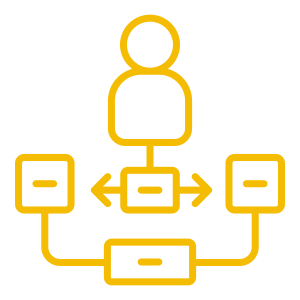
Uncoordinated multi-agent workflows cause delegation creep and cascading system failures. Grounded in baseline As-Is process mapping, organisations must implement structured context packages and human "Agent Boss" escalation paths before delegating tasks to autonomous software.

Text-based guidelines cannot keep pace with real-time autonomous execution. Enterprises must translate compliance rules into deterministic constraints using Policy-as-Code and automated SRE circuit breakers to cut network access immediately when agents breach safety limits.






%20(1).png)