

Imagine arriving at work in the morning and already knowing exactly how the previous shift performed. No waiting for spreadsheets. No chasing different teams for numbers. No spending the first part of the day trying to piece together what happened across the operation.
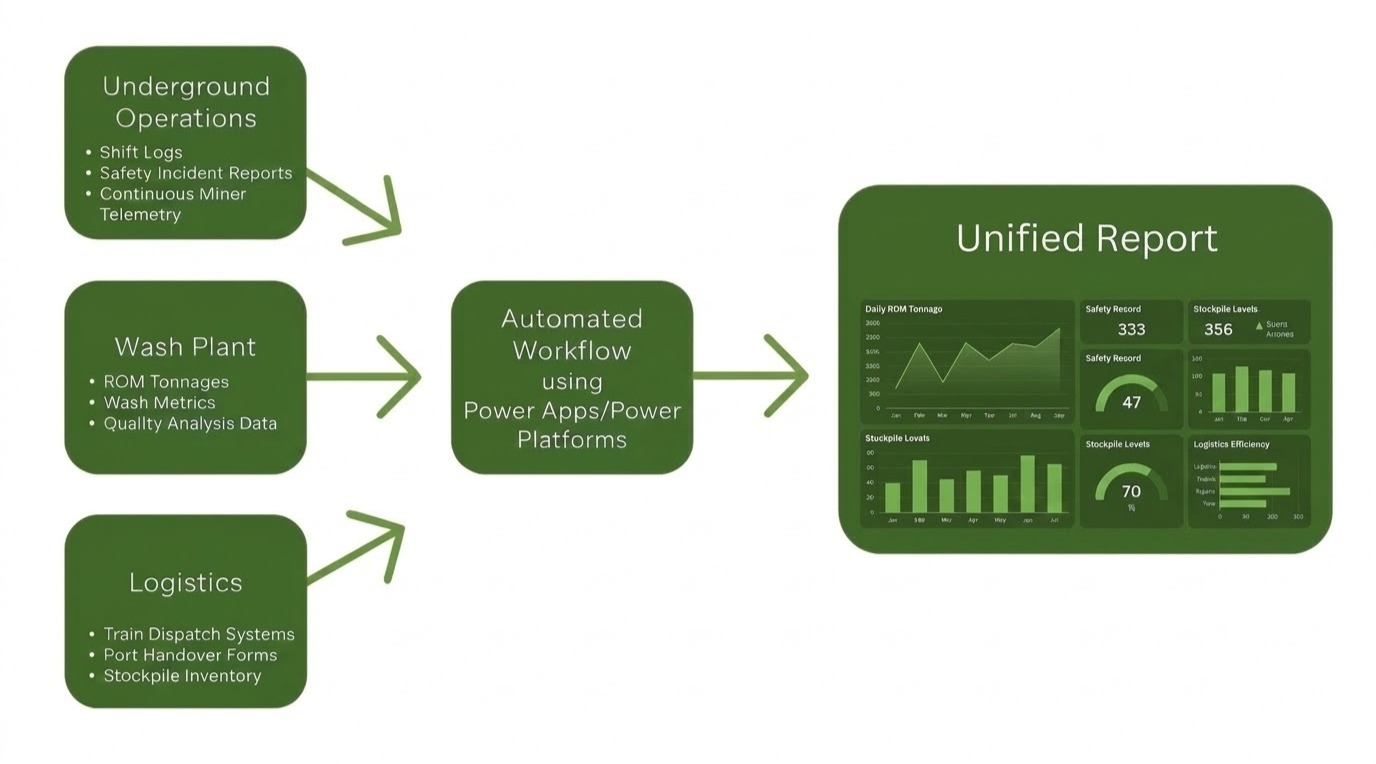
For a Coal Mine General Manager, having the right information at the right time can make a real difference. However, daily production reporting often involves gathering information from different parts of the operation, including underground production, the wash plant and logistics. When this information has to be manually collected and combined, it can take time and leave room for delays or errors.
By combining Power Automate and Power Query, much of this process can be streamlined. From collecting data to preparing it and delivering the final briefing, automation can help ensure that the information is ready when management needs it.
Think of it like having a digital assistant working while everyone else is asleep. Instead of starting the morning by collecting files, checking spreadsheets and stitching numbers together, an automated workflow can already be working in the background. Power Automate and Power Query can help manage this process through three main stages: extraction, transformation and delivery.
Extraction
The first step is getting information from the different sources involved in the reporting process. A Power Automate workflow can be scheduled to run automatically, for example at 4:00 AM, and collect available information from connected sources such as overnight Excel logs or databases. This means the data collection can already be happening before someone manually starts the process in the morning.
Transformation
Collecting the data is only the first step. The information still needs to be cleaned, organised and combined before it can actually tell us something useful. Power Query can bring information from different sources together, such as Run-of-Mine (ROM) tonnages and wash plant metrics, and prepare it for reporting.
The data can then be compared against daily targets to highlight possible shortfalls or bottlenecks. And honestly, this is where the real value comes in: the goal is not just to collect more data, but to make it easier to understand and use.
Delivery
Once the data has been collected and prepared, the final step is getting the report to the right person. Power Automate can trigger the delivery of a concise, formatted email briefing that highlights key production figures and areas needing attention.
Imagine opening your inbox at 6:00 AM and finding the information you need already waiting for you. Instead of asking, “Where are the numbers?”, management can start by asking, “What do these numbers mean, and what needs our attention?”
Conclusion
Daily production reporting is an important part of running a coal operation, but creating those reports does not have to remain completely manual.
By combining Power Automate and Power Query, parts of the reporting process can be streamlined, from collecting information to preparing it and delivering it to the relevant people. This can reduce the time spent chasing numbers and allow management to focus more on understanding what the information is actually saying.
The goal is not to replace the people who understand the operation. It is to give them the information they need without spending unnecessary time putting the full picture together.
So, what is the most time-consuming bottleneck in generating your daily coal production reports?